
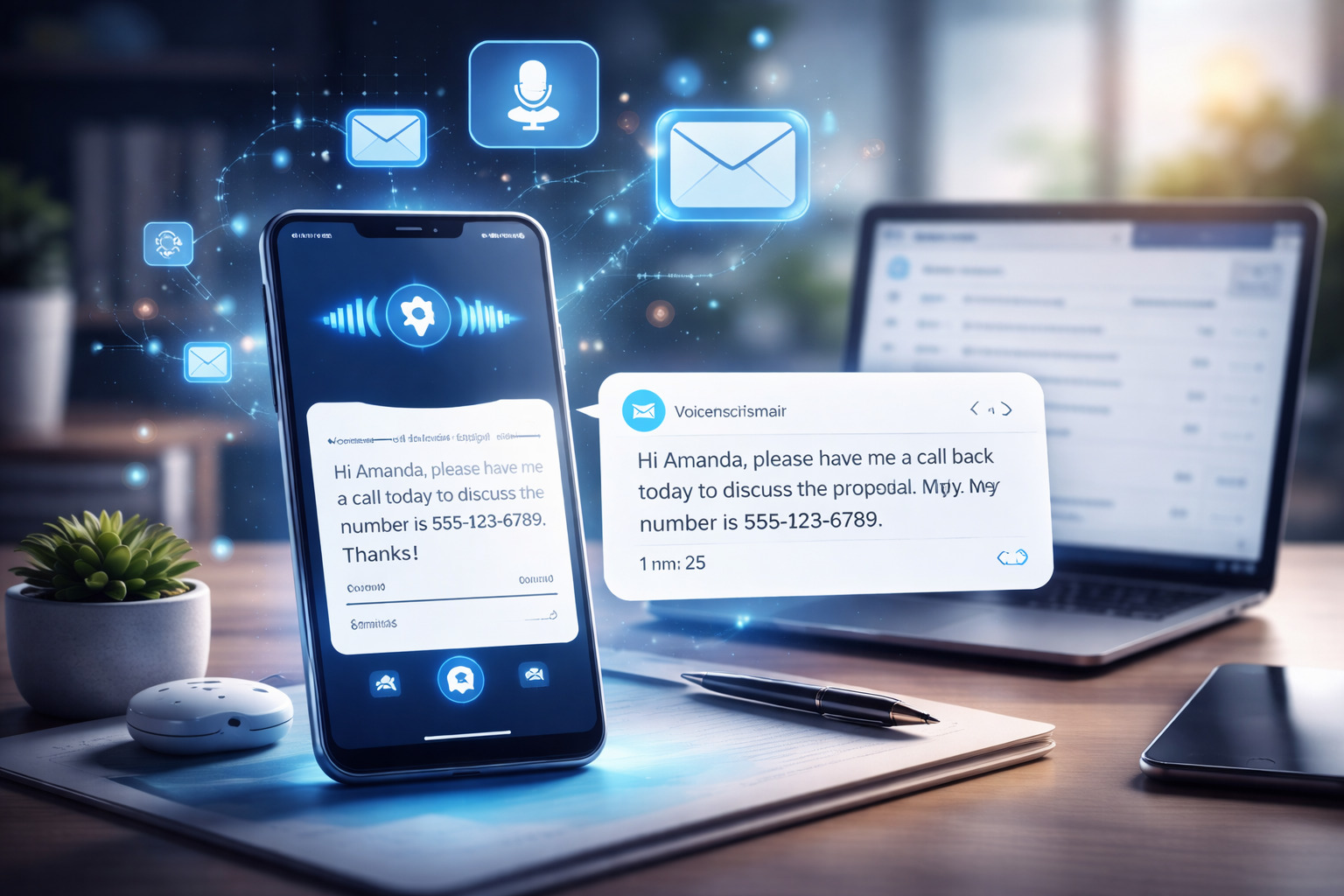
Voicemail transcription is the process of converting voice messages into readable text. Instead of listening to every voicemail one by one, messages are automatically transcribed and delivered as text usually through email, SMS, or an app dashboard. In a fast-paced digital environment, this simple feature has become a powerful productivity tool for individuals and businesses alike.
Traditional voicemail has its limits. Messages can be missed in noisy environments, during meetings, or when access to audio isn’t convenient. Voicemail transcription removes these barriers by making messages instantly readable. Whether checking a phone in public, reviewing messages during work hours, or quickly scanning important updates, transcription makes communication easier and more efficient.
How Voicemail Transcription Works
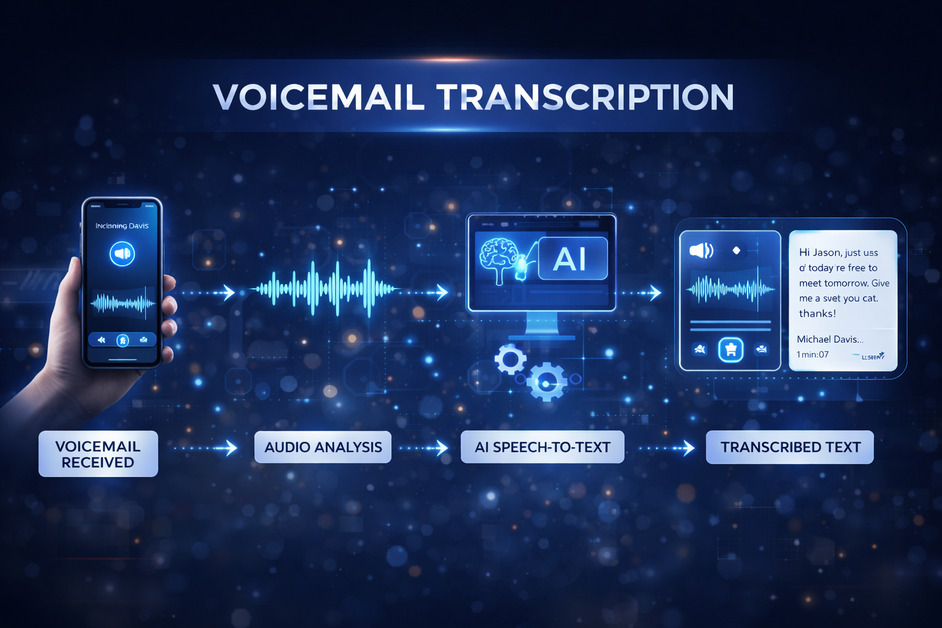
Voicemail transcription relies on speech-to-text technology powered by artificial intelligence. When a voicemail is received, the system analyzes the audio, recognizes spoken words, and converts them into text. Most modern systems continuously learn and improve accuracy over time, handling different accents, speech patterns, and tones better than older tools.
Once transcribed, the message is stored alongside the original audio. This allows users to read the voicemail first and listen to it only if needed, saving time and effort.
Key Benefits of Voicemail Transcription
- One of the biggest advantages of voicemail transcription is time savings. Reading a message takes only a few seconds compared to listening to a full voicemail. This is especially useful for professionals who receive multiple calls daily.
- Accessibility is another major benefit. Transcriptions help users with hearing impairments and make communication more inclusive. They also allow messages to be reviewed silently, which is ideal in meetings, shared workspaces, or public settings.
- Voicemail transcription also improves record-keeping. Text messages are easy to search, store, and reference later. Important details like phone numbers, addresses, or instructions can be quickly copied without replaying audio multiple times.
- For businesses, voicemail transcription enhances responsiveness. Teams can prioritize urgent messages faster, share transcriptions internally, and reduce delays caused by missed calls. This leads to better customer experience and smoother internal communication.
Use Cases Across Industries
Voicemail transcription is widely used across industries. Sales teams rely on it to quickly review client inquiries and follow up faster. Customer support teams use transcriptions to track issues, assign tickets, and maintain accurate communication records.
Remote and hybrid workers benefit from voicemail transcription by staying connected across time zones without depending on real-time calls. Freelancers and consultants use it to manage client communications more professionally, ensuring no message is overlooked.
Healthcare, legal, and real estate professionals also find voicemail transcription valuable, as it helps document conversations accurately while maintaining efficiency.
Accuracy and Limitations
While voicemail transcription technology has advanced significantly, it is not always perfect. Background noise, unclear speech, or strong accents can sometimes affect accuracy. However, most systems provide both the transcription and the original voicemail, allowing users to verify details when necessary.
Over time, AI-based transcription continues to improve, making errors less frequent and results more reliable.
Why Voicemail Transcription Is Becoming Essential
As communication becomes more digital and fast-moving, voicemail transcription is no longer just a convenience—it’s a necessity. It bridges the gap between voice and text, ensuring messages are accessible, searchable, and easy to manage.
For anyone who values efficient communication, better organization, and improved responsiveness, voicemail transcription offers a simple yet impactful solution that fits seamlessly into modern workflows.
Conclusion
As workplaces become more remote, fast-paced, and technology-driven, relying solely on traditional voicemail is no longer practical. Voicemail transcription bridges the gap between voice and text, making communication more flexible, searchable, and easy to manage. For anyone looking to stay organized and responsive, adopting voicemail transcription is a smart and future-ready choice.

Himesh is a business development professional with 8+ years of experience in the IT and digital services industry, operating at the intersection of strategy, sales, product, and execution.